
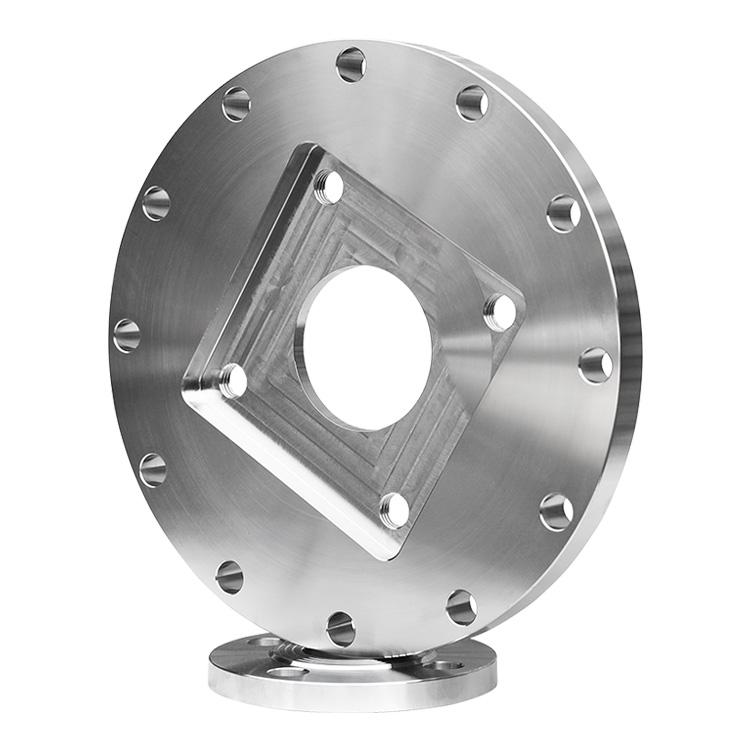
In global industrial procurement, OEM ANSI DIN standard flange supplier for global markets is a high-value keyword phrase that reflects one of the most important sourcing needs in piping, petrochemical, water treatment, power generation, shipbuilding, HVAC, and heavy equipment manufacturing. Buyers searching for an OEM flange supplier usually need more than simple product availability. They are looking for stable quality, international standards compliance, precise dimensions, material traceability, customized manufacturing, export packaging, and the ability to support different regions with matching technical requirements.
An OEM ANSI flange supplier or DIN flange supplier typically serves international projects that require standardized flange connections for pipes, valves, pumps, pressure vessels, and mechanical assemblies. Because global markets often use different flange systems, a reliable supplier must understand both ANSI/ASME standards and DIN standards, while also offering OEM production flexibility for custom drawings, private labels, special materials, and project-based specifications.
This page provides industry-focused information about OEM ANSI DIN standard flanges, including definitions, advantages, common types, size ranges, materials, applications, inspection requirements, and procurement considerations. The content is designed for use in blogs, category pages, and industry landing pages, with SEO-friendly structure and clear formatting.
An OEM ANSI DIN standard flange supplier is a manufacturer or exporter that produces flanges according to internationally recognized standards such as ANSI/ASME and DIN, while also supporting original equipment manufacturing services. OEM production means the supplier can manufacture flanges based on customer requirements, technical drawings, brand specifications, project standards, or private-label needs.
In practical terms, the supplier is expected to provide:
Global buyers often compare ANSI and DIN flanges because the standards differ in pressure classes, bolt patterns, dimensions, and nomenclature. A supplier serving international markets must therefore be able to produce accurate flange solutions for cross-border projects, equipment integration, and replacement part supply.
ANSI flange standards are widely used in North America and many international projects influenced by American engineering practices. These flanges are generally defined by ASME specifications such as ASME B16.5 and ASME B16.47, with pressure ratings often expressed in classes such as 150, 300, 600, 900, 1500, and 2500.
DIN flange standards are commonly used in Europe and many regions that follow German industrial standards. DIN flanges are known for their metric dimensions, technical consistency, and broad application in machinery, process systems, and industrial piping networks.
For international buyers, understanding both standards is essential because:
A strong OEM flange supplier can serve both ANSI and DIN requirements without compromising dimensional accuracy or traceability.
Working with an OEM ANSI DIN standard flange supplier for global markets provides several operational and commercial advantages. These advantages are especially important for distributors, engineering contractors, system integrators, and industrial buyers handling multinational projects.
| Advantage | Description | Business Value |
|---|---|---|
| International standard compatibility | Produces flanges according to ANSI/ASME and DIN requirements | Supports global projects and multi-region procurement |
| OEM customization | Allows branding, private labeling, special dimensions, and technical modifications | Improves product differentiation and project flexibility |
| Material selection | Offers carbon steel, stainless steel, alloy steel, and more | Matches corrosive, high-temperature, and high-pressure applications |
| Quality consistency | Uses controlled production and inspection processes | Reduces installation risk and warranty issues |
| Export support | Provides packaging, marking, and documentation for shipping | Simplifies customs clearance and overseas delivery |
| Large application coverage | Serves piping, valves, pumps, pressure vessels, and machinery | Expands sales opportunities across industries |
These advantages make OEM flange supply a strategic solution for international distributors and industrial buyers who need reliable, repeatable, and standards-compliant products.
ANSI flanges are available in several designs, each intended for specific connection and operating conditions. When sourced from an OEM supplier, these flange types can be manufactured in standard sizes or customized according to project demand.
| ANSI Flange Type | Typical Use | Main Feature |
|---|---|---|
| Weld Neck Flange | High-pressure and high-temperature pipelines | Long tapered hub for stress distribution |
| Slip On Flange | General industrial piping | Easy to install and align |
| Blind Flange | Closing pipe ends or pressure testing | No bore, used for sealing |
| Socket Weld Flange | Small-diameter high-pressure lines | Socket connection for strong weld fit |
| Threaded Flange | Low-weld or maintenance-sensitive systems | Internal threading for easy assembly |
| Lap Joint Flange | Systems requiring frequent dismantling | Used with stub ends for flexibility |
| Orifice Flange | Flow measurement systems | Designed for orifice plates and instrumentation |
Each flange type has different mechanical characteristics and installation advantages. OEM manufacturing helps ensure that the exact dimensions, facing, and pressure class meet the end-use requirements.
DIN flanges are widely used in metric-based industrial systems. They are particularly important in Europe, as well as in international equipment built to metric standards.
| DIN Flange Type | Typical Use | Main Feature |
|---|---|---|
| DIN Weld Neck Flange | High-pressure piping systems | Excellent load distribution and reliability |
| DIN Slip On Flange | General process systems | Simple installation and economical solution |
| DIN Blind Flange | Pipe sealing and maintenance points | Closes openings securely |
| DIN Threaded Flange | Systems where welding is limited | Threaded connection for convenience |
| DIN Lap Joint Flange | Frequent assembly/disassembly applications | Supports easy alignment and maintenance |
DIN flange products may be used in water systems, chemical plants, mechanical equipment, and pressure lines. The OEM supplier should understand metric tolerances, nominal pressure classes, and drilling patterns.
Material selection is one of the most important factors in flange performance. A qualified OEM ANSI DIN standard flange supplier for global markets should offer a range of materials to suit pressure, temperature, corrosion resistance, and cost requirements.
| Material | Key Characteristics | Common Applications |
|---|---|---|
| Carbon Steel | Strong, economical, widely used | Oil and gas, water systems, structural piping |
| Stainless Steel | Corrosion resistant, durable, hygienic | Food processing, chemical, marine, pharmaceutical |
| Alloy Steel | Enhanced strength and heat resistance | Power plants, high-temperature service |
| Duplex Stainless Steel | Higher strength and excellent corrosion resistance | Offshore, chemical processing, seawater systems |
| Nickel Alloys | Superior performance in aggressive media | Special chemical and high-corrosion environments |
OEM buyers often request specific grades such as ASTM/ASME material equivalents or DIN material references depending on project requirements. Material certificates and heat traceability are important for industrial procurement and inspection.
ANSI and DIN flanges are defined by size, pressure class, facing type, and drilling pattern. While exact specifications vary by standard and project, buyers often need a general understanding of the available ranges.
| Specification Category | ANSI Standard Range | DIN Standard Range |
|---|---|---|
| Nominal size | Commonly from 1/2" to 24" and above | Commonly from DN 10 to DN 1200+ depending on design |
| Pressure rating | Class 150, 300, 600, 900, 1500, 2500 | PN 6, PN 10, PN 16, PN 25, PN 40 and higher |
| Facing options | Flat Face, Raised Face, Ring Type Joint | Flat Face, Raised Face, special sealing faces |
| Bolt pattern | Defined by ANSI/ASME dimensional standards | Defined by DIN metric drilling standards |
Because ANSI uses imperial-style nomenclature and DIN uses metric terminology, buyers should always confirm the exact standard, class, PN rating, and flange facing before ordering.
OEM ANSI DIN standard flanges are used across many industrial sectors. Their role is to create secure, leak-resistant, and serviceable joints between pipes and equipment. A global supplier often needs to support both mass production and project-specific customization for these end markets.
| Industry | Typical Flange Use | Importance of OEM Supply |
|---|---|---|
| Oil and Gas | Pipeline connection, refineries, processing units | High-pressure reliability and traceability |
| Chemical Processing | Corrosive media handling, reactors, transfer lines | Material resistance and leak control |
| Power Generation | Steam lines, cooling systems, turbine auxiliaries | Thermal performance and long service life |
| Water Treatment | Pump stations, filtration systems, distribution lines | Durability and standardized replacement parts |
| Marine and Offshore | Seawater systems, ship piping, platforms | Corrosion resistance and export compliance |
| Food and Beverage | Hygienic process piping and equipment | Stainless steel quality and sanitary compatibility |
| HVAC and Mechanical Systems | Water circulation, utility networks, plant piping | Economical sourcing and easy installation |
The broad compatibility of ANSI and DIN flanges makes them indispensable in global engineering and maintenance operations.
OEM flange manufacturing is more than producing standard parts. It involves a range of services designed to support industrial buyers, distributors, and private-label brands. These services can improve procurement efficiency and help customers adapt products for different markets.
These OEM capabilities are particularly valuable for distributors building their own product line or for project contractors needing specification-driven supply.
Quality control is essential when sourcing ANSI and DIN flanges for international use. A dependable OEM supplier should maintain inspection processes throughout the production cycle, from raw material verification to final packaging.
| Inspection Item | Purpose | Why It Matters |
|---|---|---|
| Dimensional inspection | Confirms size, thickness, bore, and bolt circle accuracy | Ensures installation compatibility |
| Material testing | Verifies chemical composition and mechanical performance | Supports safety and standards compliance |
| Pressure-related checks | Confirms suitability for specified class or PN rating | Reduces leakage and failure risk |
| Surface quality inspection | Examines finish, coating, cracks, and defects | Improves durability and appearance |
| Marking verification | Checks standard marks, size, heat number, and grade | Supports traceability and project records |
| Packaging inspection | Ensures safe export packing and labeling | Prevents transit damage and shipping errors |
In global trade, documentation is often as important as the flange itself. Common documents may include mill test certificates, inspection reports, packing lists, and commercial invoices. Buyers should confirm documentation requirements before production begins.
When evaluating an OEM ANSI DIN standard flange supplier for global markets, buyers should consider technical capability, consistency, export experience, and quality systems rather than focusing only on price.
| Selection Factor | What to Check | Procurement Benefit |
|---|---|---|
| Standard knowledge | Ability to produce ANSI/ASME and DIN flanges correctly | Reduces specification errors |
| OEM flexibility | Customization for size, material, marking, and packaging | Supports private label and project needs |
| Production capacity | Ability to handle small, medium, and large orders | Improves supply continuity |
| Quality control | Inspection systems and traceability procedures | Improves reliability and buyer confidence |
| Export experience | Knowledge of international shipping and customs requirements | Reduces delivery delays |
| Communication | Technical responsiveness and order clarity | Helps avoid mistakes and rework |
Buyers should also request drawings or data sheets for confirmation before mass production. Clear technical communication prevents mismatch between expected and delivered flange specifications.
The flange face plays a critical role in sealing performance. Different face types are chosen based on pressure, gasket type, and installation requirements. OEM flange suppliers must manufacture these faces accurately to avoid leakage.
| Facing Type | Description | Typical Use |
|---|---|---|
| Flat Face | Flat sealing surface | Lower-pressure systems and cast iron connections |
| Raised Face | Raised sealing area around the bore | Most common industrial flange design |
| Ring Type Joint | Grooved sealing area for metal ring gasket | High-pressure and critical service systems |
Correct flange facing selection depends on the system design, gasket material, and service conditions. A reliable OEM supplier should machine the face accurately and maintain consistent surface finish.
The global flange market is driven by infrastructure expansion, industrial maintenance, process plant construction, and replacement demand. As industries continue to expand across Asia, Europe, the Middle East, Africa, and the Americas, the need for standard flanges remains strong.
Demand is especially high in sectors that require:
In this environment, the OEM ANSI DIN standard flange supplier becomes a strategic link in the industrial supply chain, helping customers source products that match regional standards while maintaining global export consistency.
Buyers of OEM ANSI DIN standard flanges commonly request technical data before placing orders. The following items are often required in quotations, catalogs, and procurement documents.
| Technical Item | Purpose |
|---|---|
| Nominal size | Determines compatibility with pipe or equipment connection |
| Pressure class or PN rating | Shows pressure capacity and design suitability |
| Material grade | Confirms corrosion resistance and strength |
| Facing type | Ensures proper sealing and gasket selection |
| Bolt hole count and diameter | Confirms drilling pattern and installation fit |
| Outside diameter and thickness | Provides dimensional verification |
| Heat number and certification | Supports traceability and quality assurance |
A detailed data sheet helps reduce order mistakes and improves the efficiency of technical review, especially for international sourcing teams.
To support search visibility, industry pages about OEM ANSI DIN standard flange supplier for global markets often include related keywords naturally throughout the content. Examples include:
Using these phrases in headings, body text, tables, and metadata can improve relevance for search engines while keeping the page informative and user-friendly.
An OEM ANSI DIN standard flange supplier for global markets plays a critical role in modern industrial supply chains. By supporting both ANSI and DIN standards, offering OEM customization, maintaining strict quality control, and providing export-ready documentation, such suppliers help businesses source flanges that are technically correct, reliable, and suitable for international use.
Whether the target market is oil and gas, chemical processing, water treatment, marine engineering, power generation, or mechanical manufacturing, the ability to deliver standard-compliant and customized flange products is essential. For buyers building blogs, directory pages, or industry landing pages, this topic offers strong SEO potential because it reflects real procurement intent, international demand, and long-tail search behavior.
From flange types and material choices to inspection requirements and OEM service advantages, the information above provides a practical foundation for creating searchable, authoritative, and conversion-friendly industrial content.


Авторские права © 2022 Чжэцзянская компания Songlin Flange Co., Ltd.
Карта сайтаЭтот веб-сайт использует файлы cookie, чтобы обеспечить вам максимально эффективное использование нашего веб-сайта.

 English
 Español
 Français
 Deutsch
 日本語
日本語 한국어
한국어 العربية
 Italiano
 Nederlands



 WhatsApp
 телефон
Комментарий
(0)