
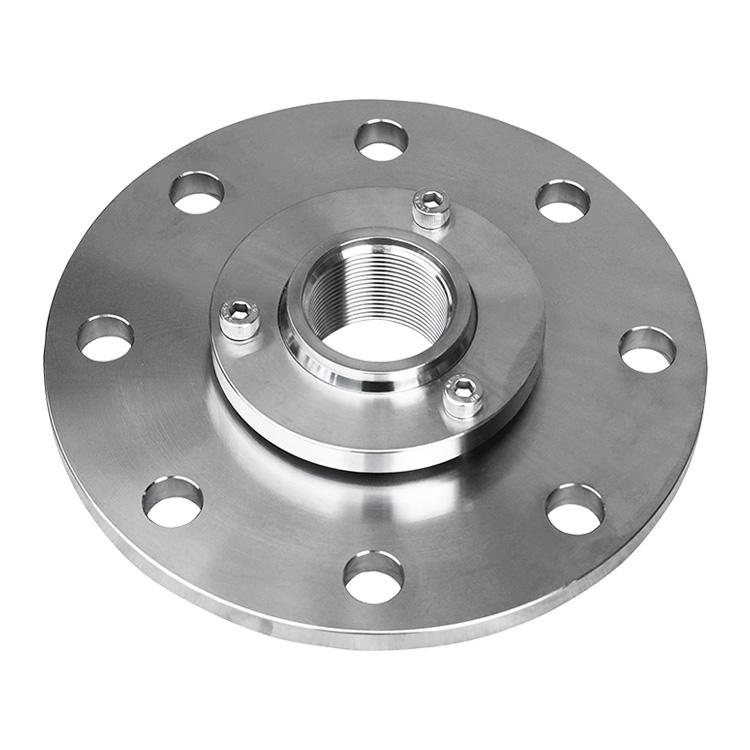
In modern industrial construction, fabrication, piping systems, and process engineering, the demand for
precision pipe flange manufacturer for engineering fabrication solutions continues to grow. Pipe
flanges are critical connection components used to join pipes, valves, pumps, pressure vessels, and other
equipment in a safe, maintainable, and leak-resistant way. For engineering fabrication projects, the quality of
the flange directly affects system reliability, installation efficiency, pressure resistance, and long-term
performance.
A precision pipe flange manufacturer supplies flanges produced with strict dimensional control,
accurate machining, consistent metallurgy, and reliable inspection standards. In engineering fabrication, where
tolerances are often tight and operating conditions can be demanding, precision becomes essential. Whether the
application is oil and gas, chemical processing, power generation, shipbuilding, water treatment, HVAC, heavy
equipment, or structural piping, flanges must meet exact specifications to ensure proper alignment and sealing.
This page provides a complete industry-focused overview of precision pipe flange manufacturing for engineering
fabrication. It includes definitions, product advantages, common materials, flange types, standards, applications,
specifications, and selection factors. The content is designed for SEO-friendly use in blogs, category pages,
service pages, and industrial directories.
A pipe flange is a mechanical connection component used to join sections of pipe or connect pipework to equipment.
A precision pipe flange is manufactured with strict dimensional accuracy, controlled surface finish,
and consistent hole alignment to support high-performance engineering applications. Precision flanges are commonly
used where leak prevention, assembly speed, maintenance access, and load-bearing reliability are important.
In engineering fabrication, precision pipe flanges must fit perfectly with matching flanged components. Accurate
bolt hole positioning, flatness, face finish, and concentricity are essential. Even minor deviations can cause
gasket failure, alignment issues, stress concentration, or leakage. That is why precision pipe flange manufacturing
is considered a specialized industrial process rather than a basic metalworking task.
Engineering fabrication projects require components that can be installed quickly, perform reliably, and integrate
into complex piping layouts. Precision pipe flange manufacturing supports these goals by reducing installation
errors and improving consistency across large production runs.
For engineering fabrication businesses, choosing a precision pipe flange manufacturer helps improve project quality,
reduce downtime, and support compliance with technical requirements. This is especially important in industries
where safety, pressure containment, and regulatory conformity are non-negotiable.
A professional precision pipe flange manufacturer typically produces a wide range of flange types to suit
different pressure classes, pipe systems, and installation requirements. The following are the most common types
used in engineering fabrication.
| Flange Type | General Description | Typical Use |
|---|---|---|
| Weld Neck Flange | Long tapered hub designed for stress distribution and high-pressure service | Oil and gas, pressure piping, process systems |
| Slip-On Flange | Slides over the pipe and is welded on both sides | General fabrication, low to moderate pressure systems |
| Blind Flange | Solid flange used to close the end of a pipe or opening | Testing, isolation, system closure |
| Socket Weld Flange | Pipe is inserted into a socket and welded around the outside | Small-diameter high-pressure piping |
| Threaded Flange | Internal threads allow installation without welding | Non-welded assemblies, maintenance-friendly systems |
| Lap Joint Flange | Used with a stub end for easier alignment and frequent disassembly | Corrosion-resistant systems, food, chemical, and utility piping |
| Orifice Flange | Special flange designed for flow measurement instruments | Process monitoring and metering systems |
| Reducing Flange | Combines flange connection and pipe size reduction in one component | Space-saving fabrication layouts |
Different flange types serve different engineering needs. The choice depends on pressure rating, temperature,
medium, installation method, maintenance requirement, and piping design standards.
Material selection is a major factor in pipe flange performance. A precision pipe flange manufacturer for
engineering fabrication may offer a broad range of materials to suit corrosive, high-temperature, or high-pressure
environments.
| Material | Key Characteristics | Typical Applications |
|---|---|---|
| Carbon Steel | Strong, cost-effective, widely used in general industrial piping | Water systems, structural piping, general fabrication |
| Stainless Steel | Corrosion-resistant, durable, suitable for hygienic and chemical environments | Food processing, chemical plants, marine systems |
| Alloy Steel | Enhanced strength and heat resistance for demanding service | Power plants, refineries, high-temperature piping |
| Duplex Stainless Steel | Excellent strength and corrosion resistance | Offshore, chemical, and aggressive environments |
| Nickel Alloys | Highly resistant to heat, pressure, and severe corrosion | Specialized chemical and high-performance systems |
| Cast Iron | Traditional option for specific utility and low-pressure applications | Water handling, legacy systems |
| Aluminum | Lightweight and easy to machine, used in selected low-pressure systems | Light industrial fabrication, special equipment |
The best material depends on operating pressure, temperature range, corrosion exposure, welding compatibility,
and the service life expected by the engineering fabrication project.
Precision pipe flange manufacturing generally follows recognized international standards. These standards ensure
compatibility, safety, and interchangeability across fabrication systems. A reliable manufacturer should be able to
produce flanges according to specified dimensional and material requirements.
| Standard / Specification | Purpose | Common Use |
|---|---|---|
| ASME B16.5 | Dimensions, ratings, and tolerances for pipe flanges and flanged fittings | North American industrial piping |
| ASME B16.47 | Large diameter steel flanges | Large-scale process and utility systems |
| EN 1092-1 | European flange standard for steel flanges | European engineering fabrication projects |
| DIN Standards | Dimensional and engineering compatibility requirements | General industrial installations |
| JIS Standards | Japanese industrial specifications for flanges | Equipment and piping systems in Asia |
| ISO Specifications | Global quality and consistency frameworks | International projects |
| MSS Standards | Guidelines for pressure fittings and flanged components | Specialized fabrication and pressure service |
Standard compliance helps ensure that flanges are dimensionally compatible with pipes, valves, gaskets, and bolting
systems used in engineering fabrication.
The process used by a precision pipe flange manufacturer must combine material expertise, machining accuracy, and
strict quality control. The manufacturing workflow usually includes the following stages:
Advanced manufacturers may use CNC lathes, automated drilling systems, coordinate measuring machines, spectrometers,
ultrasonic testing, and surface roughness testers to maintain production consistency. In engineering fabrication,
these controls help ensure that every flange meets the required specification.
Selecting a precision pipe flange manufacturer for engineering fabrication offers several important advantages.
These benefits support both project quality and operational efficiency.
| Advantage | Benefit to Engineering Fabrication |
|---|---|
| Dimensional accuracy | Improves fit-up, alignment, and installation speed |
| Consistent quality | Reduces defects, rework, and inspection failures |
| Better sealing performance | Supports lower leak risk and stronger gasket compression |
| Material flexibility | Allows selection for corrosion, heat, and pressure conditions |
| Standard compatibility | Ensures flange interchangeability with existing systems |
| Project reliability | Supports safe long-term operation in demanding environments |
| Cost efficiency | Reduces maintenance, replacement, and installation costs over time |
These advantages are especially valuable in fabrication workshops, EPC projects, industrial plant construction,
and custom equipment manufacturing.
Precision pipe flanges are used in a broad range of engineering fabrication applications. Their role is to create
safe, serviceable connections within piping and mechanical systems.
In these environments, precision pipe flanges must withstand mechanical stress, environmental exposure, pressure
fluctuations, and repeated maintenance cycles. Their performance can have a direct impact on system uptime and
safety.
When evaluating a precision pipe flange manufacturer, engineering fabricators should pay attention to the
following dimensions and technical parameters.
| Parameter | Why It Matters |
|---|---|
| Outer diameter | Determines overall fit and system compatibility |
| Bolt circle diameter | Ensures correct bolt alignment |
| Bolt hole size and count | Affects assembly and load distribution |
| Flange thickness | Supports pressure resistance and structural strength |
| Pipe bore | Matches the internal pipe diameter for flow efficiency |
| Facing type | Influences gasket sealing and connection quality |
| Hub length | Important for weld neck and stress transfer performance |
| Surface roughness | Affects gasket performance and sealing reliability |
Precision in each of these dimensions helps reduce installation problems and supports correct long-term operation.
Flange facing refers to the design of the sealing surface. A precision pipe flange manufacturer may produce
different facing styles depending on gasket type, pressure class, and service conditions.
| Facing Type | Description | Typical Use |
|---|---|---|
| Raised Face (RF) | Most common facing style with a raised sealing area | General industrial piping |
| Flat Face (FF) | Flat sealing surface commonly used with cast iron or low-pressure systems | Utility piping and selected low-pressure applications |
| Ring Type Joint (RTJ) | Precision-machined groove for metal ring gaskets | High-pressure and critical service |
| Tongue and Groove (T&G) | Matched faces that improve gasket containment and alignment | Specialized process systems |
For engineering fabrication projects, selecting the right flange supplier is a technical decision. A strong
manufacturer should offer accurate production, material traceability, and consistent quality assurance.
It is also important to confirm whether the supplier can handle special requirements such as non-standard sizes,
special drilling patterns, custom materials, or project-specific pressure ratings.
Quality control is a defining feature of any precision pipe flange manufacturer for engineering fabrication. The
best manufacturers use multiple inspection methods to confirm that each flange meets technical requirements.
| Inspection Method | Purpose |
|---|---|
| Dimensional inspection | Verifies measurements against specification |
| Visual inspection | Checks surface defects, cracks, and finishing quality |
| Material testing | Confirms chemical composition and grade compliance |
| Hardness testing | Evaluates material strength and heat treatment results |
| Ultrasonic testing | Detects internal discontinuities in critical components |
| Surface roughness testing | Measures sealing surface finish |
| Hydrostatic or pressure-related checks | Supports validation in certain applications and assemblies |
Reliable inspection improves confidence in product performance and helps reduce failure risk in the field.
Pressure class is another important specification in flange selection. It indicates the flange’s ability to handle
operating pressure under specified conditions. The exact rating system depends on the standard used.
| Pressure Class | General Meaning | Typical Context |
|---|---|---|
| Class 150 | Common low to moderate pressure rating | Utility and general industrial piping |
| Class 300 | Higher pressure capability than Class 150 | Process systems and more demanding service |
| Class 600 | Suitable for high-pressure applications | Refinery and heavy industrial systems |
| Class 900 | Very high-pressure service | Critical process and energy applications |
| Class 1500 | Extreme pressure capability | Specialized high-performance systems |
| Class 2500 | Highest standard pressure range in many systems | Severe service and critical engineering projects |
Pressure class must always be matched with the operating temperature, material selection, gasket type, and project
code requirements.
For content development and search visibility, it is useful to understand the common keyword phrases associated
with this industry. These terms can appear naturally in product pages, category pages, and fabrication articles.
These keywords should be used naturally and responsibly in SEO content. Overuse can reduce readability, while
properly structured content helps search engines understand topic relevance and user intent.
Precision pipe flange manufacturing supports a wide range of buyers in the engineering and fabrication supply
chain. Fabricators, contractors, and OEMs all benefit from components that arrive ready to fit, perform, and
document.
| Buyer Type | Main Benefit |
|---|---|
| Fabricators | Faster assembly, fewer fit-up issues, better project efficiency |
| Contractors | Improved schedule control, reduced site rework, easier installation |
| OEMs | Consistent integration into equipment and modular systems |
| Plant operators | Reliable maintenance, long service life, and reduced leakage risk |
A precision pipe flange manufacturer for engineering fabrication plays a vital role in supporting
reliable piping systems, industrial assemblies, and custom mechanical projects. Precision flanges improve fit-up,
enhance sealing performance, reduce installation issues, and support safe operation across a wide range of
industries. From material selection and machining accuracy to inspection and standard compliance, every step in the
manufacturing process contributes to final product quality.
For engineering fabrication projects, selecting precision pipe flanges is not just a purchasing decision; it is an
engineering choice that affects performance, maintenance, and long-term operational success. By understanding flange
types, materials, standards, and quality requirements, buyers and fabricators can make more informed decisions and
build systems with greater confidence.
```


Авторские права © 2022 Чжэцзянская компания Songlin Flange Co., Ltd.
Карта сайтаЭтот веб-сайт использует файлы cookie, чтобы обеспечить вам максимально эффективное использование нашего веб-сайта.

 English
 Español
 Français
 Deutsch
 日本語
日本語 한국어
한국어 العربية
 Italiano
 Nederlands



 WhatsApp
 телефон
Комментарий
(0)