
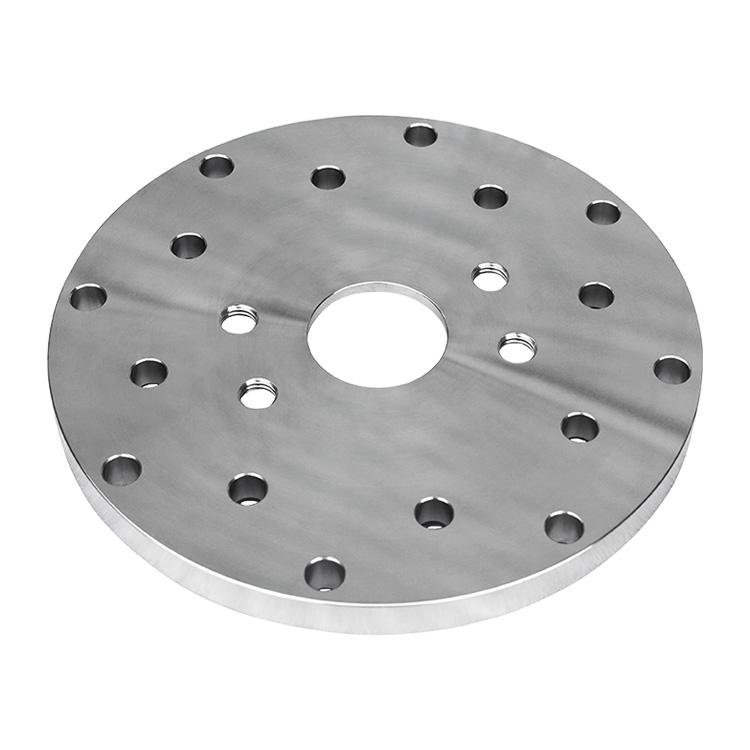
A Welding Neck Flange for Heat Exchanger Systems is one of the most reliable and widely used
flange types in thermal transfer equipment, piping connections, and high-pressure process lines. In heat exchanger
applications, this flange design is preferred for its strong butt-weld connection, excellent stress distribution,
and ability to perform under demanding operating conditions. When engineers need a durable, leak-resistant,
and maintenance-friendly connection for heat exchanger piping, the welding neck flange is often the first choice.
This type of flange is engineered with a long tapered hub that is welded directly to a pipe or nozzle. The gradual
transition between the flange and the pipe helps reduce stress concentration, making it suitable for systems with
temperature fluctuations, vibration, pressure surges, and repeated thermal cycling. For heat exchanger systems,
these performance characteristics are especially important because the equipment often operates in challenging
industrial environments.
In this guide, you will find a detailed overview of the Welding Neck Flange for Heat Exchanger Systems,
including definition, key advantages, material options, typical specifications, installation considerations,
and selection factors. The content is designed for SEO performance and can be used directly in an industrial blog,
product category page, or engineering resource page.
A welding neck flange is a forged flange with a long tapered hub that is butt-welded to a pipe or fitting. The
neck gradually transfers stress from the flange base to the pipe wall, which improves mechanical integrity and
reduces the risk of flange failure. This makes it ideal for applications where pressure, vibration, and thermal
expansion are major concerns.
In heat exchanger systems, the welding neck flange is commonly used at shell-side and tube-side connections,
inlet and outlet nozzles, process piping interfaces, and high-pressure utility lines. Its structural design helps
maintain a secure joint even when the system experiences repeated heat-up and cool-down cycles.
Compared with slip-on or threaded flanges, a welding neck flange offers better performance in critical service.
It is generally chosen when the system demands higher strength, better fatigue resistance, and superior sealing
reliability.
Heat exchanger systems are used in power generation, chemical processing, petroleum refining, HVAC, food processing,
marine systems, and other industrial applications. These systems often deal with high temperatures, corrosive media,
fluctuating pressures, and long operating cycles. A Welding Neck Flange for Heat Exchanger Systems
provides the mechanical support needed to maintain a stable connection under these conditions.
The flange’s long hub improves load transfer and minimizes localized stress. This is especially valuable where
heat exchangers are connected to pipelines that may expand or contract due to thermal changes. Because the weld is
full-penetration butt weld, the connection is stronger than many other flange types and can deliver a long service life
when properly installed.
The design also helps support consistent sealing performance. In heat exchanger service, even minor leakage can affect
thermal efficiency, increase maintenance costs, and create safety risks. Welding neck flanges help reduce these concerns
by providing a rigid and dependable joint.
In a heat exchanger system, the welding neck flange acts as a connection point between the exchanger nozzle and the
attached piping or instrumentation line. The flange is welded to the pipe end, and a matching flange is bolted
together using a gasket in between. This creates a sealed joint that can handle pressure and temperature changes.
The long neck helps transfer mechanical loads away from the weld area and into the pipe wall more evenly. This is
particularly beneficial when heat exchangers are exposed to expansion stress caused by rapid process heating or cooling.
The result is a more stable and dependable connection than many short-hub or lap joint designs.
For shell-and-tube exchangers, plate heat exchangers with piping manifolds, and high-pressure process exchangers,
the welding neck flange is often selected when system reliability is a top priority.
| Industry | Typical Heat Exchanger Use | Why Welding Neck Flanges Are Preferred |
|---|---|---|
| Oil and Gas | Refining units, cooling circuits, process heating and cooling | High pressure, thermal shock, and strict sealing requirements |
| Chemical Processing | Reactor cooling, solvent recovery, heat transfer loops | Corrosive media and demanding process conditions |
| Power Generation | Steam systems, condensers, auxiliary cooling systems | High temperature and continuous operation |
| HVAC and District Energy | Chilled water and heating exchange equipment | Durability and reliable maintenance performance |
| Food and Beverage | Sanitary heating and cooling circuits | Stable connections and ease of system integration |
| Marine and Offshore | Cooling systems, seawater heat exchangers | Resistance to vibration and harsh operating environments |
| Pharmaceutical | Process temperature control systems | Clean operation and dependable sealing |
The exact specification of a Welding Neck Flange for Heat Exchanger Systems depends on the pressure
class, nominal pipe size, material, face type, and manufacturing standard. Below is a general reference table that
summarizes commonly used specification parameters.
| Specification Item | Common Options | Notes |
|---|---|---|
| Flange Type | Welding Neck Flange | Long tapered hub, butt-weld connection |
| Pressure Rating | Class 150, 300, 400, 600, 900, 1500, 2500 | Selected based on system design pressure and temperature |
| Nominal Size | 1/2" to 48" or larger | Depends on exchanger nozzles and piping size |
| Face Type | Raised Face (RF), Flat Face (FF), Ring Type Joint (RTJ) | RF is very common; RTJ is used in severe service |
| Material | Carbon Steel, Stainless Steel, Alloy Steel, Duplex, Nickel Alloys | Material selected according to fluid and temperature |
| Standard | ASME B16.5, ASME B16.47, EN 1092-1, DIN, JIS | Must match project and regional requirements |
| Weld Type | Butt Weld | Provides strong structural continuity |
| Temperature Range | Dependent on material | Can be designed for elevated temperature service |
| Coating/Finish | Black paint, anti-rust coating, polished, pickled and passivated | Selected for corrosion protection and application needs |
Choosing the right material for a Welding Neck Flange for Heat Exchanger Systems is essential for
service life, corrosion resistance, and safe operation. Material selection should match the process fluid, design
temperature, design pressure, and corrosive environment.
| Material | Main Benefits | Typical Use Case |
|---|---|---|
| Carbon Steel | Good strength, economical, widely available | General utility and non-corrosive heat exchanger systems |
| Stainless Steel 304/304L | Good corrosion resistance, clean finish | Food, beverage, chemical, and water systems |
| Stainless Steel 316/316L | Improved resistance to chlorides and corrosion | Seawater-adjacent and more aggressive process environments |
| Alloy Steel | Higher strength at elevated temperature | High-temperature process exchangers |
| Duplex Stainless Steel | Excellent strength and corrosion resistance | Offshore, chemical, and harsh-service heat exchanger systems |
| Nickel Alloys | Exceptional resistance to aggressive chemicals and heat | Severe corrosion and specialized processing applications |
The flange face plays a major role in sealing performance. Different face styles are used depending on the pressure
class, gasket type, and service conditions. For a Welding Neck Flange for Heat Exchanger Systems,
the most common face types are listed below.
| Face Type | Description | Typical Application |
|---|---|---|
| Raised Face (RF) | Most common design; small raised sealing area | General industrial heat exchanger systems |
| Flat Face (FF) | Full contact face with no raised sealing area | Cast iron equipment and low-pressure connections |
| Ring Type Joint (RTJ) | Metal ring gasket seated in machined groove | High-pressure, high-temperature, and severe service |
Understanding how a welding neck flange compares with other flange styles can help users make better decisions for
heat exchanger piping and equipment design. While multiple flange types are used in industry, the welding neck flange
is usually chosen for the most critical connections.
| Flange Type | Strength | Sealing Performance | Best Use |
|---|---|---|---|
| Welding Neck Flange | Very High | Excellent | High-pressure, high-temperature heat exchanger systems |
| Slip-On Flange | Moderate | Good | Low to medium service with lower mechanical demand |
| Threaded Flange | Moderate | Good | Low-pressure systems where welding is not preferred |
| Lap Joint Flange | Moderate | Good | Systems requiring easy alignment and frequent disassembly |
| Blind Flange | Very High | Excellent | Pipe or nozzle closure points, not direct flow connections |
Heat exchanger systems frequently undergo thermal cycling, especially during startup, shutdown, and process changes.
The repeated expansion and contraction of metal components can create fatigue stress in flange connections. The
Welding Neck Flange for Heat Exchanger Systems is particularly effective in these conditions because
its long hub and weld geometry help reduce peak stress at the flange-to-pipe joint.
Vibration is another concern, especially in systems connected to pumps, compressors, or process lines with dynamic
flow conditions. The rigid structure of the welding neck flange helps maintain alignment and joint stability. This
contributes to improved operational reliability and lower maintenance frequency.
While exact dimensions vary by standard and pressure class, welding neck flanges are typically specified by nominal
pipe size, pressure rating, bolt circle diameter, raised face height, bore size, and hub thickness. For heat exchanger
systems, dimension compatibility is essential to ensure proper alignment with nozzles, piping, gaskets, and bolting.
| Dimension Parameter | What It Means | Why It Matters |
|---|---|---|
| Nominal Pipe Size (NPS) | Standard pipe size designation | Must match exchanger nozzle and piping size |
| Outside Diameter (OD) | Total diameter of the flange | Important for layout and bolt pattern compatibility |
| Bolt Circle Diameter | Circle on which bolt holes are placed | Ensures matching with companion flange |
| Hub Length | Length of the tapered neck | Affects stress transition and weld alignment |
| Bore Diameter | Internal opening of the flange neck | Should match the pipe schedule and internal flow path |
| Flange Thickness | Thickness of the body section | Related to strength and pressure capacity |
| Raised Face Height | Height of sealing area on RF flanges | Important for gasket compression and sealing |
Proper installation is critical for achieving the full performance benefits of a
Welding Neck Flange for Heat Exchanger Systems. Even a high-quality flange can underperform if the
weld preparation, alignment, or bolt tightening procedure is not done correctly.
Key installation factors include accurate pipe cutting, correct bevel preparation, proper fit-up, qualified welding
procedures, and controlled bolt torque. The flange should be aligned carefully to avoid uneven gasket compression.
Weld inspection may include visual inspection, dye penetrant testing, radiographic testing, or other methods depending
on project requirements.
After welding, the flange face should be checked for cleanliness and damage. During assembly, the gasket should be
selected according to pressure, temperature, and fluid compatibility. Bolt tightening should follow a cross pattern
to help distribute load evenly and improve sealing integrity.
The gasket is an essential part of the flange joint. In heat exchanger systems, gasket selection affects sealing
reliability, chemical resistance, and temperature tolerance. Different gasket styles may be used depending on the
service conditions and flange face type.
| Gasket Type | Main Features | Typical Use |
|---|---|---|
| Spiral Wound Gasket | Flexible, strong, good for pressure and temperature variation | General industrial heat exchanger service |
| Metal Ring Gasket | High integrity sealing, used with RTJ flanges | High-pressure and severe service |
| Non-Metallic Gasket | Economical and easy to install | Low-pressure or mild service systems |
| Graphite Gasket | Good temperature resistance and chemical compatibility | Elevated temperature applications |
When selecting a welding neck flange for heat exchanger applications, engineers and buyers should evaluate the full
operating environment rather than focusing only on size and price. The right choice depends on pressure, temperature,
media properties, corrosion potential, and maintenance expectations.
Corrosion is one of the main concerns in heat exchanger systems, especially when fluids contain moisture, chlorides,
acids, hydrocarbons, or other aggressive substances. To improve durability, a Welding Neck Flange for Heat
Exchanger Systems may be supplied with different surface treatments and protective finishes.
Common options include anti-rust coating, pickling and passivation for stainless steel, galvanizing in certain
environments, and specialized painting systems for carbon steel flanges. The final choice depends on storage
conditions, installation environment, and long-term exposure to the process medium or ambient atmosphere.
Welding neck flanges are highly valued in high-pressure service because their design can withstand significant
mechanical and thermal loads. The butt weld creates a continuous metal path that enhances structural integrity.
In heat exchanger systems operating under severe duty, this reliability is essential.
High-pressure exchangers require joints that maintain alignment and sealing under stress. The tapered neck geometry
supports these requirements by minimizing bending loads and helping the flange perform more consistently over time.
This is why the welding neck flange remains a standard solution in critical process applications.
Although welding neck flanges are permanently welded to the pipe, they still offer strong maintenance advantages in
bolted flange joints. Once installed, they provide a stable connection that supports repeated gasket replacement,
bolt inspection, and leak prevention checks. In heat exchanger systems, this can reduce the frequency of unplanned
shutdowns.
Regular inspection should include bolt condition, gasket condition, corrosion checks, face flatness, and weld area
evaluation. Preventive maintenance helps extend service life and maintain thermal efficiency. In critical systems,
nondestructive examination may be used as part of a planned inspection program.
To improve search visibility, content about welding neck flanges can naturally include related industry keywords.
The following phrases are commonly used by engineers, buyers, and technical readers:
Using these keywords in a natural and informative way can help the page rank for relevant industrial search queries
while still providing valuable information to readers.
The main advantage is its strength and stress distribution. The long tapered hub and butt-weld connection make it
highly reliable for high-pressure and high-temperature heat exchanger service.
Carbon steel and stainless steel are among the most common materials, but the best choice depends on temperature,
pressure, and corrosion requirements.
Yes. They are often selected for systems with thermal cycling because their design helps reduce stress concentration
and improves fatigue resistance.
They can be used in many heat exchanger systems, including shell-and-tube and process cooling equipment, as long
as the design conditions and standards are properly matched.
Raised Face is the most common, although Ring Type Joint and Flat Face options are also used depending on the
service requirements.
A Welding Neck Flange for Heat Exchanger Systems is a critical component for industrial piping and
thermal transfer equipment where strength, leak resistance, and long-term durability matter. Its tapered hub,
butt-weld construction, and compatibility with high-pressure and high-temperature service make it one of the most
dependable flange choices available.
Whether the application involves chemical processing, power generation, HVAC, marine cooling, or refinery service,
the welding neck flange provides a proven solution for connecting heat exchangers to piping systems. By selecting the
right standard, material, face type, gasket, and installation method, users can improve reliability, reduce
maintenance, and support safe operation over the long term.
For SEO-focused industrial content, this topic performs well because it combines technical relevance, high-intent
search terms, and practical engineering value. A well-structured page about welding neck flanges can attract readers
seeking specifications, advantages, and application guidance for heat exchanger systems.
```


Авторские права © 2022 Чжэцзянская компания Songlin Flange Co., Ltd.
Карта сайтаЭтот веб-сайт использует файлы cookie, чтобы обеспечить вам максимально эффективное использование нашего веб-сайта.

 English
 Español
 Français
 Deutsch
 日本語
日本語 한국어
한국어 العربية
 Italiano
 Nederlands



 WhatsApp
 телефон
Комментарий
(0)